
The 3 A.M. Feed: A Night-Feeding Routine That Actually Works
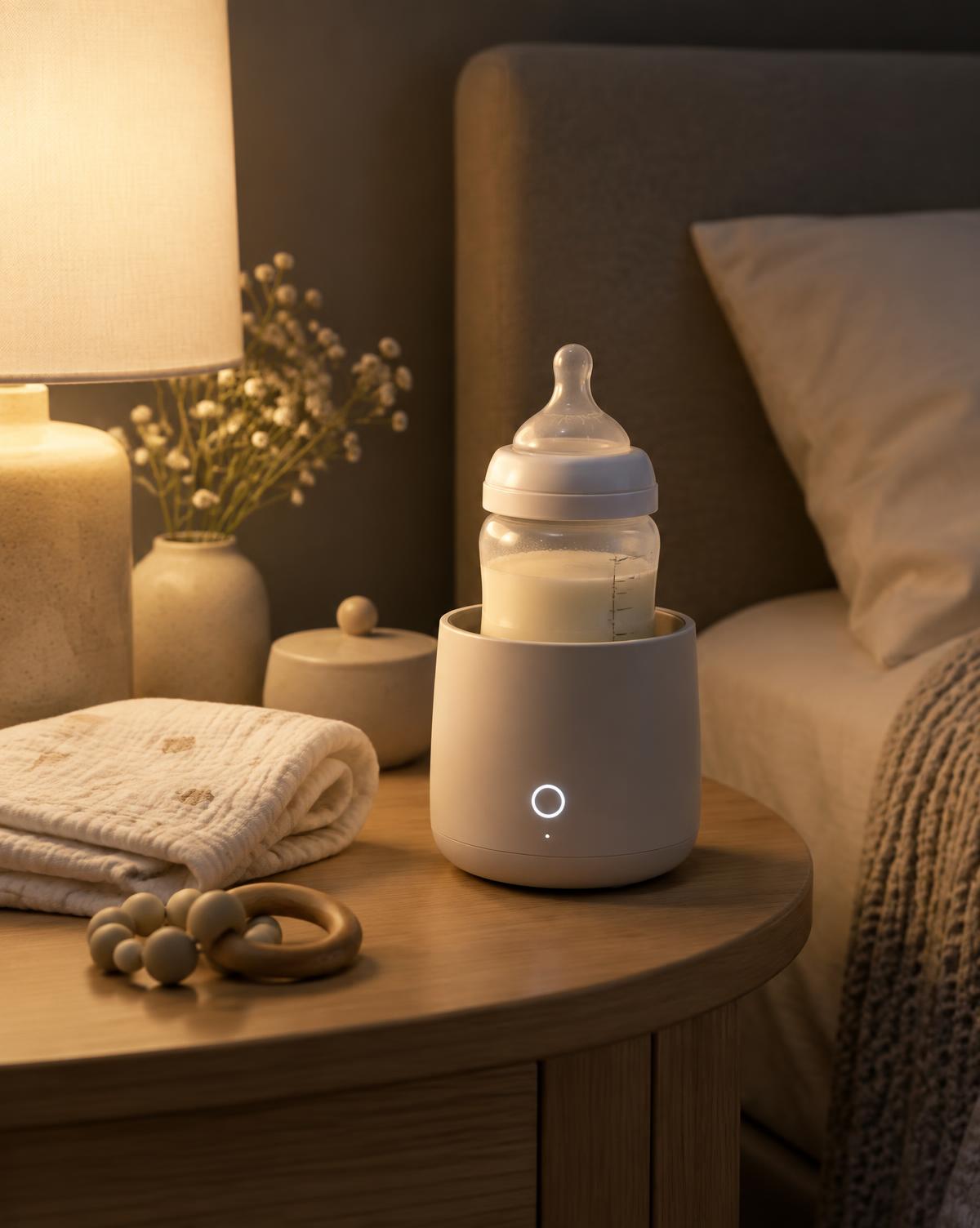
Every new parent knows the 3 a.m. feed has two parts: feeding the baby, and everything around it — lights, bottles, burp cloths, and a sink of parts waiting afterwards. The feed itself is the easy part. What makes nights feel endless is the logistics. A routine will not give you a full night's sleep, but it can take the friction out of the part you control.
Set up the station before you go to bed
The best night feed starts at 10 p.m., not 3 a.m. Before your own bedtime, stage everything within arm's reach of your feeding spot:
- Bottles and parts washed, dried and assembled — or a clean bottle ready, with formula prepared fresh at feed time if that is how you feed
- A filled water bottle and a snack for you — night feeds are hungry work
- Two burp cloths (one is never enough), a spare onesie, and diapers and wipes by the changing spot
- A dim, warm night-light instead of the ceiling light
Five minutes of setup in the evening buys you a feed that runs on autopilot when you are half asleep.
Keep the feed boring
Bright light and stimulation tell both you and your baby that it is daytime. Many parents find feeds go more smoothly when the room stays dark and quiet: feed in low light, keep talking to a whisper, and skip the phone scroll if you can. There is nothing to entertain a newborn at 3 a.m. — the goal is feed, burp, change, and back down.
Follow the safe-sleep basics every time, however tired you are: baby on their back, on a firm, flat surface, with nothing soft in the sleep space. When the feed ends, baby goes back to their own sleep space — that is what makes it safe to let yourself fall asleep again.
Change smart, not twice
Unless the diaper is dirty or soaked through, many parents leave it for the feed that follows the longer stretch of sleep, since a full change can wake a baby all the way up. A dirty diaper always gets changed. Order matters less than consistency: pick feed, burp, change — or change first, if your baby settles better that way — and keep it the same every night. Predictability is what makes the routine fast.
Hand the wash-up to a system
The hidden second shift of night feeding is the cleanup: bottles and pump parts that need washing before the next round, a few hours later. Standing at the sink at 4 a.m. is where good routines go to die.
This is the job MOOBBI Wash was designed for. It washes, steam-sterilizes and dries bottles and pump parts in a single cycle, so the morning set is clean, dry and ready instead of waiting in a basin. It is our hero product for a reason: the most repeated task of early parenthood, taken off your hands. See MOOBBI Wash — $279.
However you clean up, the rule from pediatric guidance is simple: parts get washed after every use and dried fully before they are stored. Our step-by-step guide walks through the CDC method in detail: How to Clean Breast Pump Parts Correctly.
The routine, on one line
Set up at night, feed in the dark, burp, change what is needed, start the wash cycle, go back to sleep. A system beats willpower at 3 a.m. — especially a system you set up while you were awake.